Every healthcare practice depends on consistent cash flow to operate successfully. Whether you’re a solo provider, a growing therapy practice, or a multi-specialty medical group, delivering excellent patient care also requires a strong financial process behind the scenes.
This is where Revenue Cycle Management (RCM) becomes essential.
What Is Revenue Cycle Management?
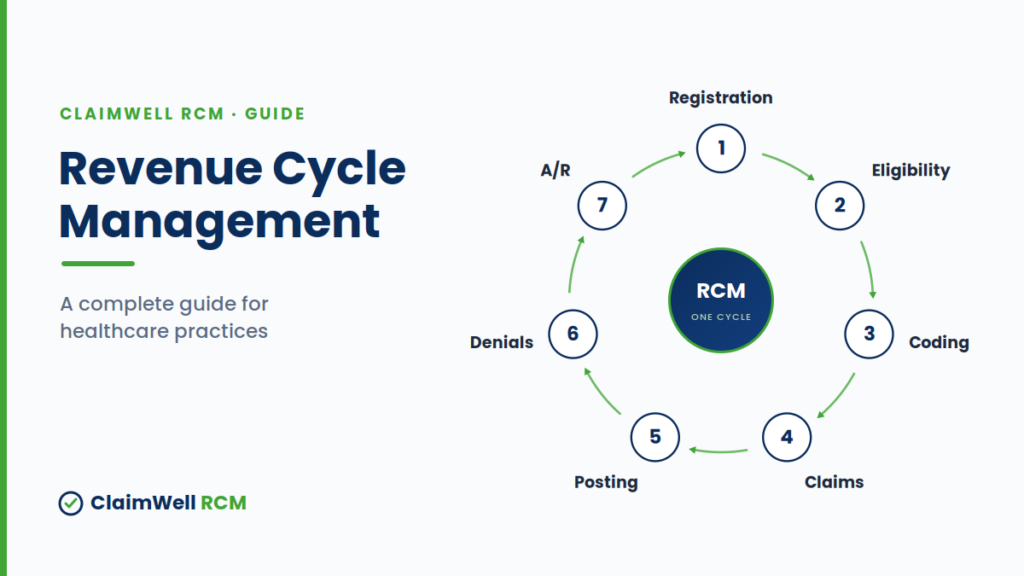
Revenue Cycle Management is the complete process of managing a patient’s financial journey—from scheduling an appointment through insurance verification, medical coding, claim submission, payment collection, and ongoing accounts receivable follow-up.
A well-managed revenue cycle helps practices:
- Increase collections
- Reduce claim denials
- Improve cash flow
- Minimize billing errors
- Save valuable administrative time
- Deliver a better patient experience
At ClaimWell RCM, we believe Revenue Cycle Management isn’t simply about submitting insurance claims. It’s about building efficient operational workflows that allow healthcare providers to focus on what matters most—caring for patients.
RCM is the full financial process behind patient care—from scheduling and insurance verification to coding, claims, payments, and follow-up. Done well, it increases collections, reduces denials, and frees your team to focus on patients.
Understanding the Revenue Cycle
Revenue Cycle Management begins before the patient is even seen and continues until every dollar owed has been collected. A typical revenue cycle includes the following stages.
Patient Registration
Accurate patient demographics are the foundation of clean claims. Collecting incorrect information can lead to rejected claims, delayed payments, and unnecessary administrative work.
Insurance Eligibility Verification
Insurance verification confirms:
- Active insurance coverage
- Benefits
- Deductibles
- Copays
- Prior authorization requirements
Verifying eligibility before appointments significantly reduces claim denials and payment delays.
Medical Coding
Medical coders translate clinical documentation into standardized CPT, ICD-10-CM, and HCPCS codes. Accurate coding ensures:
- Correct reimbursement
- Compliance
- Reduced audit risk
- Faster claim processing
Medical Billing & Claims Submission
After coding is complete, claims are prepared and submitted electronically to insurance payers. Clean claims submitted correctly the first time are far more likely to be processed without delays.
Payment Posting
Once payments are received, they are accurately posted into the practice management system. Payment posting allows providers to monitor:
- Insurance reimbursements
- Patient balances
- Outstanding claims
- Payment trends
Denial Management
Even well-managed practices experience claim denials. The key difference lies in how quickly those denials are identified, corrected, and resubmitted. Effective denial management includes:
- Root cause analysis
- Appeals
- Corrected claims
- Payer communication
- Continuous process improvement
Accounts Receivable Follow-Up
Unpaid claims require consistent follow-up. Professional A/R management helps practices recover outstanding reimbursements while reducing aging balances.
A clean claim starts long before submission. Accurate registration, eligibility verification, and coding prevent the majority of denials downstream—so the earliest stages of the cycle protect the most revenue.
Why Revenue Cycle Management Matters
An inefficient revenue cycle affects every part of a healthcare practice. Common symptoms include:
- Growing Accounts Receivable
- Increasing claim denials
- Delayed reimbursements
- Billing staff burnout
- Poor patient communication
- Reduced profitability
A strong Revenue Cycle Management strategy improves operational efficiency while supporting long-term financial stability.
Rising accounts receivable, increasing denials, and slow reimbursements are early warning signs of a revenue cycle that needs attention.
Common Revenue Cycle Challenges
Many healthcare organizations experience similar operational obstacles.
High Claim Denial Rates
Missing documentation, coding errors, and eligibility issues frequently result in denied claims.
Slow Payments
Delayed reimbursement affects cash flow and limits practice growth.
Credentialing Delays
Providers cannot bill insurance companies until credentialing is complete. Proper credentialing directly impacts revenue generation.
Administrative Burden
Many providers spend excessive time managing billing instead of focusing on patient care.
Compliance Risks
Healthcare regulations continue evolving. Maintaining HIPAA-conscious billing workflows and accurate documentation helps reduce compliance risks.
How Professional Revenue Cycle Management Improves Practice Performance
Partnering with an experienced Revenue Cycle Management company provides several advantages.
Improved Cash Flow
Efficient billing processes reduce delays and accelerate reimbursement.
Lower Denial Rates
Accurate claims submitted the first time reduce unnecessary denials.
Better Patient Experience
Clear billing communication creates a more positive patient experience.
Greater Operational Efficiency
Administrative staff spend less time resolving billing issues and more time supporting patient care.
Actionable Reporting
Performance reporting allows practices to monitor financial health and identify improvement opportunities.
Revenue Cycle Management for Behavioral Health
Behavioral health practices often face unique reimbursement challenges. These may include:
- Session limits
- Authorization requirements
- Complex documentation
- Telehealth billing
- Coordination of benefits
- Frequent payer policy changes
Effective Revenue Cycle Management helps behavioral health providers reduce administrative burden while maintaining consistent reimbursement.
However, ClaimWell RCM also supports practices across a wide range of healthcare specialties, including primary care, family medicine, multi-specialty groups, and other outpatient providers.
Behavioral health is one of our strongest areas of expertise—but it’s one of many. Explore all the specialties we serve to see how ClaimWell supports practices across healthcare.
Choosing the Right Revenue Cycle Management Partner
When evaluating an RCM partner, healthcare practices should consider:
- Industry experience
- Transparent communication
- HIPAA-conscious workflows
- Revenue-focused operations
- Reporting capabilities
- Technology compatibility
- Dedicated account support
- Scalable services
A successful partnership should improve operational efficiency—not create additional complexity.
How ClaimWell RCM Can Help
At ClaimWell RCM, we provide end-to-end Revenue Cycle Management services designed to help healthcare practices strengthen financial performance while reducing administrative workload. Our services include:
- Revenue Cycle Management
- Medical Billing
- Medical Coding
- Insurance Eligibility Verification
- Provider Credentialing
- CAQH Management
- Payment Posting
- Denial Management
- Accounts Receivable Follow-Up
- Revenue Cycle Consulting
Our goal is simple: help healthcare providers maximize revenue, reduce operational friction, and focus on delivering outstanding patient care.
Frequently Asked Questions
What is Revenue Cycle Management?
Revenue Cycle Management is the process of managing the financial lifecycle of a patient—from scheduling through final payment collection.
Why is Revenue Cycle Management important?
Effective RCM improves cash flow, reduces denials, increases reimbursement accuracy, and supports operational efficiency.
Does Revenue Cycle Management include medical billing?
Yes. Medical billing is one component of Revenue Cycle Management, alongside coding, credentialing, eligibility verification, payment posting, denial management, and accounts receivable follow-up.
Can small healthcare practices benefit from Revenue Cycle Management?
Absolutely. Small practices often see significant improvements in efficiency, revenue collection, and administrative workload through well-managed RCM processes.
Final Thoughts
Revenue Cycle Management is far more than insurance billing. It is the operational foundation that supports a financially healthy healthcare practice.
When every stage of the revenue cycle is managed effectively—from patient registration through final reimbursement—providers can spend less time navigating administrative challenges and more time delivering exceptional patient care.
Whether you’re building a new practice or optimizing an established organization, investing in efficient Revenue Cycle Management can improve financial stability, operational performance, and long-term growth.
Ready to Improve Your Revenue Cycle?
If your practice is experiencing claim denials, delayed payments, credentialing challenges, or increasing administrative workload, our team is here to help. Schedule a complimentary Revenue Cycle Assessment to identify opportunities for improvement.
Schedule Your Free Revenue Cycle Assessment
Leave a Reply